Climate Action Tai Tokerau has set up a Whangārei IDG Community Hub, joining more than 700 other hubs globally.
A group of Europeans established the Inner Development Goals (IDGs) based on the realisation that we will not achieve the United Nations Sustainable Development Goals by 2030. Indeed, for many of the goals, we are going backwards. It is not that we lack the technical capability to achieve them.
Take clean water and sanitation for example. UNESCO estimates that “achieving universal access to safe drinking water and sanitation in 140 low- and middle-income countries would cost about USD 114 billion per year”.
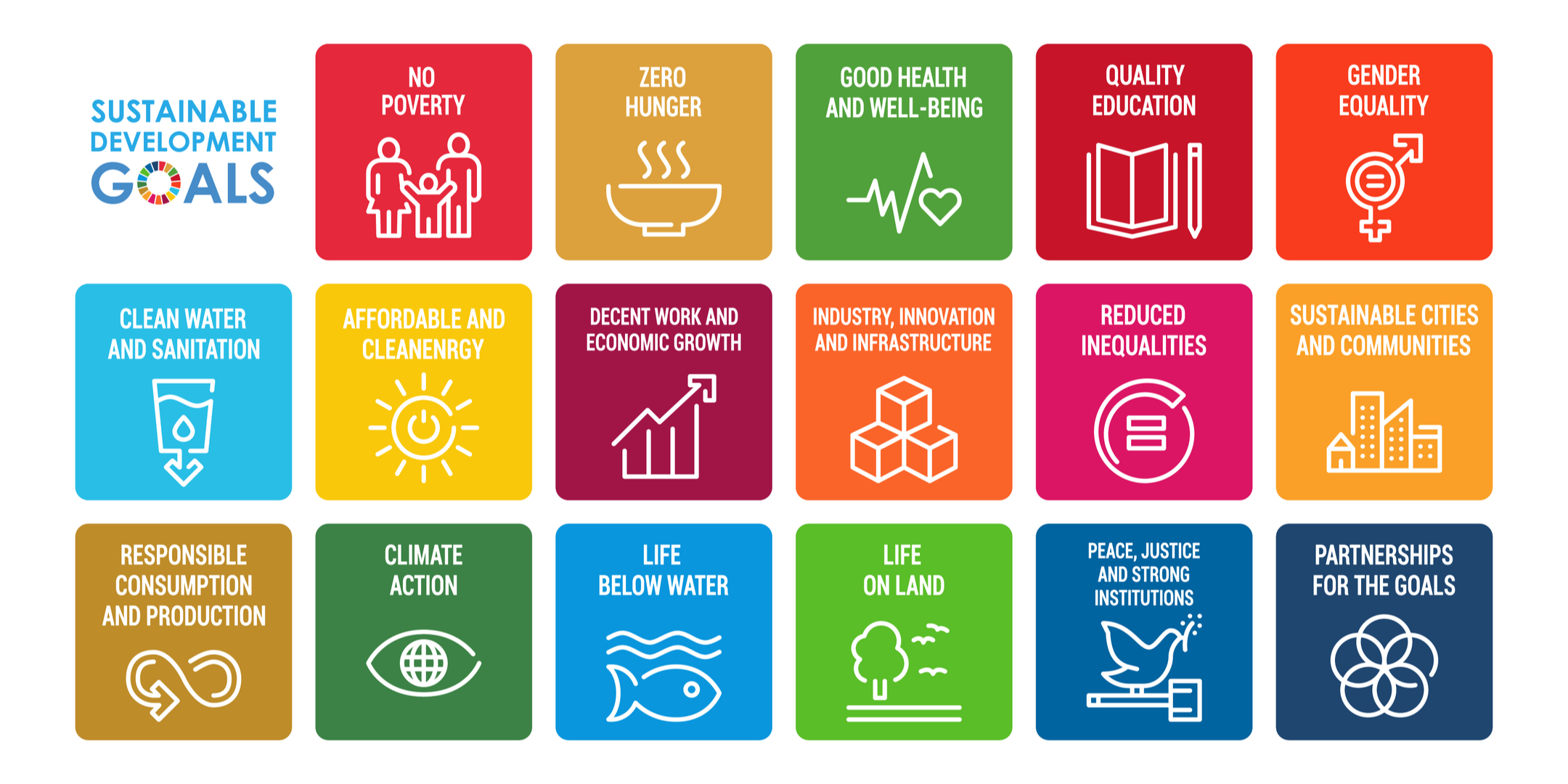
By contrast, global military expenditure is over $2US trillion. Our prioritising warfare over clean water compromises several of the other goals, including the failure of governance (Peace, Justice and Strong Institutions), and gener equality – it is often the women who have to walk considerable distances to fetch water.
So this is not a deficit in technology; it is a deficit in our ability to work together on what really matters. Gustave Speth, former Chair of the UNDP, states it beautifully.
I used to think that the top environmental problems were biodiversity loss, ecosystem collapse and climate change. I thought with 30 years of good science we could address those problems. But I was wrong. The top environmental problems are selfishness, greed and apathy… And to deal with these we need a spiritual and cultural transformation.
The Inner Development Goals framework
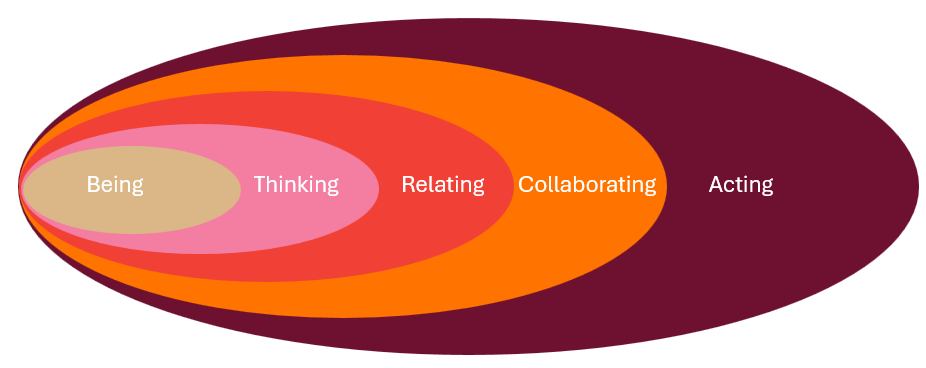
The IDG framework consists of 25 skills groued into five dimensions.
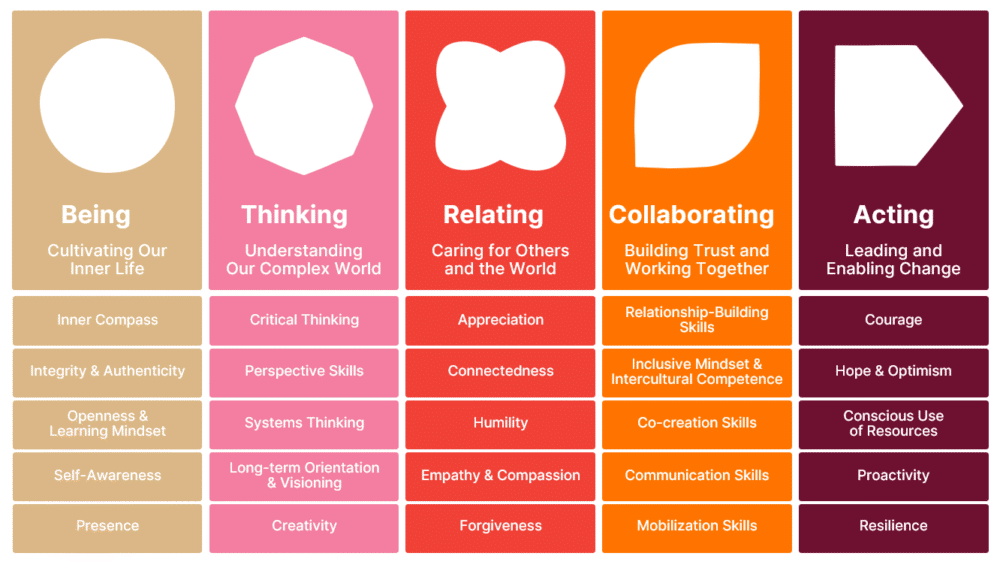
The goals begin with the being dimension – cultivating our inner life, and progress through thinking, relating, and collaborating, to acting. They were developed through a rigorous process drawing on a diversity of sources. A major attraction to me is their inclusiveness – they provide a unifying set of human skills and values that should resonate with diverse peoples – they reflect values present in all of the planet’s major religions, and in humanist academic thought. You can access the Inner Development guide here, and explore in more detail here.
The IDGs in our global community
The IDGs skills can benefit a diversity of people from kindergarten kids to corporate leaders, from families, to collective global enterprises.
We may despair when seeing the environmental, social, and economic injustices occurring in the world today. But with the benefit of 21st-century hindsight, we can see that our journey through recorded history has been one of embracing ever-wider loyalties. Those communities we once saw as diametrically opposed to ours are now more broadly tolerated or embraced. The current retrograde trend of polarisation will come to be seen as a speed bump on the road to global citizenry. The crises we face now are providing the lessons we need to achieve a more unified and peaceful world. Let’s hope we learn the lessons in time.
The soft stuff is hard
I taught the “soft stuff” on NorthTec’s business degree for a couple of decades – leadership, communication, thinking and culture. I had the privilege of learning from a high proportion of mature students, who brought their organisational experiences to classroom discussions and assignment work. It was evident that many organisations struggled with the soft stuff – how people work together to achieve organisational goals. The positive examples were rare. A couple are worth noting here.
Over several years stdents who were working for Manaia Health were effusive about the leadership Skills of Chris Farrelly (later Sir Chris). Chris went on to serve as the Auckland City Missioner for five years.
When Ken Rivers was the Chief Executive of the New Zealand Refining Company, he led the refinery in defining the organisation’s values. He started by running workshops for staff to explore their own values in a process that draws on the being and thinking dimensions of the IDGs. The company’s values thus became an expression of co-creation.
These are just two settings where the IDGs can provide a unified framework to ultimately help us be in action together more effectively. Where could they be helpful in your life and work?
 Bruce-Iri
Leave a comment