Global risks and the meta-crisis

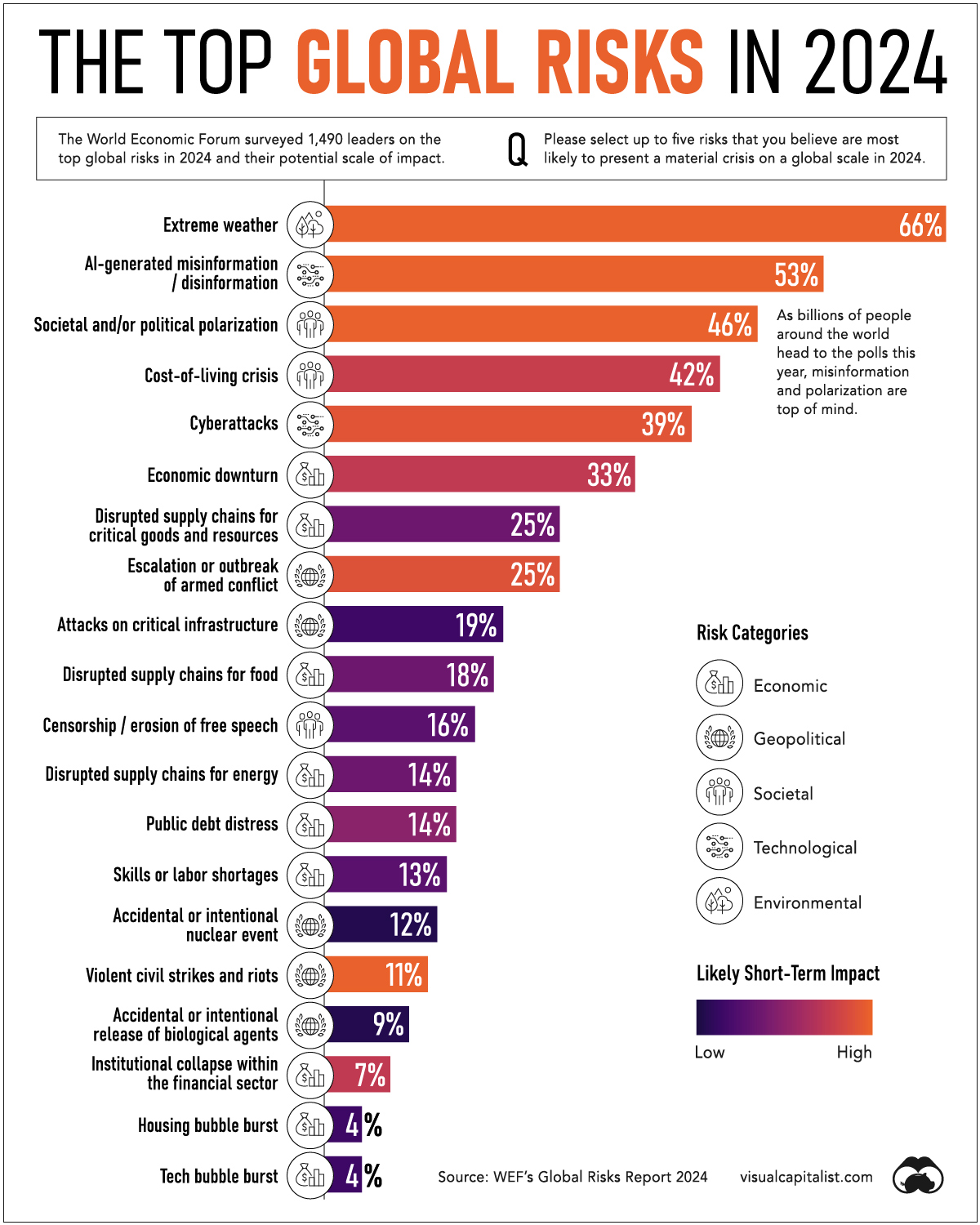
The World Economic Forum’s assessment of Global Risk is based on a survey of 1,490 leaders. The risks are grouped into five categories, but to me they all look to be created by humans – including the top risk, extreme weather. Note that these risks focus on material crises so tend to have an economic focus. Major issues such as biodiversity decline and income inequality are not considered.
It makes sense to conceptualise the crises as a meta-crisis, as all facets of the crisis can be connected as they are created by humans. I would like to think that we are Homo empathicus as posited by Jeremy Rifkin (see below), but he warns that our innate empathic nature is subverted by our families, and institutions, enabling the instincts of greed and competition to flourish.

Greed and self-interest have always been with us, but even the wealthiest and most powerful rulers in traditional societies were limited by the amount of damage they could do. Industrialisation and the consumerism it has spawned have magnified greed enabling the accumulation of wealth beyond to wildest dreams of former despots.

Note that numbers two and three on the list includes the note “as billions of people around the globe head to the polls this year, misinformation and polarisation are top of mind”. Together, one or both of these two risks were identified by 99% of those surveyed.

Polarisation

Considering the climate crisis, we have most of the technology we need to mitigate it, either in our hands or in the pipeline. What we don’t have is the ability required to work together for solutions. We have this ability in small groups and communities but aren’t able to consummate it in larger communities. Sooner or later we encounter another community with conflicting perspectives and we get tribal.

Amanda Ripley, the author of High Conflict, says that conflict is necessary, but when it becomes toxic (high) it becomes very counter-productive. She identifies four factors that contribute to high conflict.

  • Group identities – when our identity becomes strongly embedded in a group, others with opposing perspectives become the “them” to our “us”. Identifying a group that poses a threat – even if that threat has no substance is a crude tactic used by some politicians.
  • Conflict entrepreneurs – these are the people that create conflict effortlessly. You can probably identify some you know personally and are aware of in the public sphere.
  • Humiliation – Humiliating a person or a group spawns conflict. The humiliation Germany suffered through the Treaty of Versailles created conditions for the rise of the Third Reich.
  • Corruption – According to Daniel Serwer “corruption fuels conflict by undermining the rule of law, worsening poverty, facilitating the illicit use of resources and providing financing for armed conflict”.

Indeed it is tragic that many peoples’ collective efforts to heal facets of the meta-crisis are negated by the onset of wars and other manifestations of personal and corporate greed.

Depolarising

Governments in democracies at least, tend to follow the mood of their electorate validating the truism that people get the government they deserve. Depolarisation can certainly be influenced by a well-intentioned government, but has to be built on community foundations. Self-reflection and working constructively in our communities is a good place to start. High Conflict includes some great ideas about resolving conflict.

Personally, I am reflecting how I became too emmeshed in political discourse over the last few months. So I have resolved to avoid those thoughts and discussions and to lean into spiritual practices that help me to rise above tribal politics. And in my whanau, my community and the people I work with it means backing away from things that might trigger potential toxic conflict. Even thinking, but not articulating thoughts that could lead to toxic conflict are to be avoided as I am aware that my internal dialogue and behaviour need to be congruent.

This provides a foundation for me to be more effective in communities and climate action. In my role with Climate Action Tai Tokerau, I intend to set up spaces for people to engage on these issues to identify practical remedies for polarisation.

What does this mean for you?

Trust, covid and climate

A lack of trust slows progress acting like a tax, whereas in a high trust environment, things can happen faster. So claims Stephen Covey jnr. in his book The Speed of Trust. Two of the wicked problems that face us now, covid and climate change, reveal the importance of trust.

Covid and trust

In my country (Aotearoa New Zealand) we were doing well. Then the delta strain of covid came along resulting in our biggest city, Auckland, enduring over three months of lockdown. Having covid back on our communities helped to accelerate vaccination rates, and after a slow start, we now have over 92% of the eligible population with their first dose, and 84% with the second. This is (at the time of writing) 278 days after administering the first dose here. The CNN vaccine tracker rates us at 145 doses administered per 100 people, compared to the United States (for example) on 135 after 346 days.

Image credit: Metropolitan State University of Denver

One of the reasons for our relative speed could be that we are a more cohesive society, compared to the U.S. where politics is becoming increasingly tribal. As of 13 September there was a 13% difference in vaccination rates between counties in the U.S. that voted for Joe Biden (52.8%) and Donald Trump (39.9%). Where populations are polarized, trust is low. Today, in Aotearoa, the Auckland District Health Board has the highest rate of vaccination (>95%) while my region, Northland, has the lowest at 85%. Northland has the highest percentage of Māori population in Aotearoa. They were on the receiving end of colonisation with its legacy of distrust. If you are a member of a population group that has low trust the government, why would you accept public health messaging?

Climate change and trust

If climate change were just a technical problem, we might have solved it by now. But it is cultural and social. Cultural because we are embedded in a culture of consumerism, and social because we see most of those around us not showing overt sighs of concern. We know that burning fossil fuels is a big part of the problem, but most of us, when fueling our cars manifest a higher priority for personal and family mobility than contributing to climate action.

The scientists are telling us we are in an exponential crisis and a two degrees warmer world may be catastrophic for humanity. But for some reason we aren’t responding with the same urgency as we are for the covid pandemic.

I wear a mask in public places mostly to conform with others around me, who probably have similar motivations to me. I have been vaccinated mostly because I want to protect my family and community. But where are the same behaviors in relation to climate change? Where is the daily briefing from our political leaders? What is the equivalent of seeing our Prime Minister sanitise and wear a mask in the realm of climate action? Where is evidence of massive government expenditure to mitigate and adapt to the climate crisis? We need a sense of urgency from leaders at all levels of the community.

Look around. Who do you trust to lead the way with climate action?

How outrospective are you?

Outrospection is about shifting from introspection to a more external focus. Roman Krznaric labels the 20th Century as the Age of Introspection with the Freudian revolution popularising “the inward gaze, especially the idea of solving personal problems by delving into the inner, unconscious world of our childhood, dreams and forgotten memories”. [1]

Do we spend too much time self-absorbed, obsessing on first world problems? Extending our empathy seems an appropriate antidote for excessive introspection.

Empathy

Outrospection is about empathising with others. Both Roman Krznaric and Jeremy Rifkin refer to the biological basis of empathy, based on the presence of mirror neurons. These brain cells enable us to detect emotions in others and experience the same emotions as those we observe or interact with. V.S. Ramachandran calls mirror neurons “Gandhi neurons” claiming that they enable a direct connection between our brains[2].

Jeremy Rifkin’s RSA Animate video, The Empathic Civilisation, is probably my most watched video. He calls us Homo empathicus as empathy is at the foundation of our sociality. Why is it not more evident, and why do we frequently see barbaric human behaviour? According to Rifkin:

We have to rethink the human narrative…If we are truly Homo empathicus, then we need to bring out that core nature, …if it is repressed by our parenting, our educational system our business practice and government, the secondary drives come, the narcissism, the materialism, the violence, the aggression.

We have an increased capacity for empathy. In earlier centuries, when most of us were limited to confined geographies, the people down the road, or over the hill could be our enemies. With the advent of improved global communication it is easier for us to identify with people from all corners of the globe and to communicate with them through social media. An impressive number of us will respond with donations when we see our fellow humans suffering from the results of natural or man-made disasters.

Roman Krznaric echoes these thoughts. With reference to climate change, he suggests that we need to extend our empathy across space, to those poorer economies that will be (and are) being hardest hit by the impact. And we must further extend empathy across space to future generations.

In the words of Jeremy Rifkin.

Is it possible that we could extend our empathy to the entire human race as an extended family, and to our fellow creatures as part of our evolutionary family and to the biosphere as our common community? If it is possible to imagine that, then we may be able to save our species and save our planet… If its impossible to imagine that, then I don’t see how we are going to make it.

Are you an empath? Here is a quiz from the Greater Good Science Center to help you decide.

[1] from Empathy: A Handbook for Revolution, Roman Krznaric (2014) page xxiii

[2] This page from the Being Human Conference includes chapters of a video on mirror neurons.

Redefining management for the 21st Century

Management texts do a brilliant job of categorising and detailing management thinkers – the people that have shepherded or at least recorded the impressive rise of industrialisation in the 20th Century. Industrialisation generated unprecedented material advances for us. The down side is the impact on the environment and the ossification of management practice.

I have revisited Stephen Covey’s 8th Habit, to shape up the challenge of redefining management. He quotes the great Peter Drucker.

In a few hundred years, when the history of our time will be written from a long-term perspective, it is likely that the most important event historians will see is not technology, not the Internet, not e-commerce. It is an unprecedented change in the human condition. For the first time – literally – substantial and rapidly growing numbers of people have choices. For the first time, they will have to manage themselves. And society is totally unprepared for it.

He elaborates on Peter Drucker’s thinking about the revolutionary changes precipitated by the information age, outlined in Drucker’s prophetic 1992 Harvard Business Review article. This video by Stephen Covey outlines the significance of the transitions from age to age.

It’s no longer a world of controlling people. It’s a world of unleashing people.

And that is the challenge.

The management control fetish perhaps peaked in the eighties when the language of management referred to people as “labour units”.

In contrast Stephen Covey builds on the “whole person” paradigm from his best selling 7 Habits of Highly Effective People. This acknowledges our four dimensions, physical, intellectual, social/emotional and spiritual. From this perspective, employment doesn’t just transact work for material rewards, it also enables creativity and social connection all done to serve “human needs in principled ways”.

whole person paradigm covey

So what is the 8th Habit? It is to “find your voice and inspire others to find their voice”. He suggests we harness creative forces to enable voice, rather than following the “cultural software” that leads to loss or suppression of voice. This is significant as the habits of industrial era management are enculturated. An epochal change is required that may take a generation or two.

So how do we do it? Stephen Covey tells us:

They learn of their true nature and gifts. They use them to develop a vision of great things they want to accomplish. With wisdom they take initiative and cultivate great understanding of the needs and opportunities around them. They meet those needs that match their unique talents, that tap their higher motivations, and that make a difference. In short, they find and use their voice. They serve and inspire others. They apply principles that govern growth and prosperity in human beings and in organizations; principles that draw the highest and best from a “whole person” — body, mind, heart, and spirit. Equally significant, they choose to influence and inspire others to find their voice through these principles as well. (The 8th Habit pg 26)

The win-win

We are not just “labour units”. We don’t exist only to work. In finding our voice, in an empathetic social setting, whether it be work, family, or community, our lives are enriched and our search for meaning facilitated. The organisations we contribute our energy and creativity to get the benefits of our engagement and enthusiasm.

Since the turn of the Century, there have been many people articulating the necessary changes, including my book Better Business for a Better World, first published in 2000. There is a plethora of guidance from books, blogs and videos.

Peter Drucker and Stephen Covey were not the first to signal a new management paradigm, but they bring a rare clarity to shine a light to a better future.

Positioning the economy

The economy has a privileged place in contemporary life. Economic metrics are reported a little like the weather and any politician who wants to be elected has to bend the knee to the hegemony of economics. A healthy economy is typically prioritised over other aspirations.

That is thinking for yesterday’s world. For most of our history, people didn’t even know how big the planet was. It was flat, and went on for miles with plenty of room for expansion. We regarded the earth as an open system, with infinite resources and room for conquest and expansion.

earth closed system

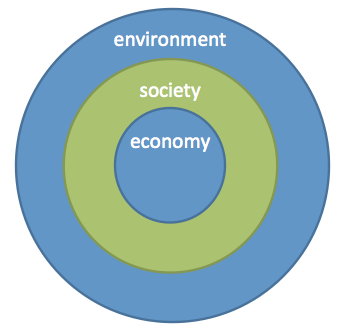
environment society economyBut now we know that it is a closed system. Astronaut Ron Garan calls our planet a “fragile oasis” – a perspective gained from 178 days in space. Times have changed. There are over 7.3 billion of us now. The industrial revolution has given us the tools to extract and process the planet’s resources and we have haphazardly disposed of the resultant products and attendant waste. In our closed system, this has become a problem, and it threatens our continued tenure of the planet like nothing else in recorded history.

We can no longer regard the economy in isolation to society and the planet’s ecosystems. It is important to review our perspective. There is a hierarchy. The economy is a function of human activity and depends on human communities – there can be no economy without society. Society in turn depends on the planet as a home.

 The overdue account

Unable to update our thinking about the earth’s resources we continue to plunder and pollute. Natures services as provisions, regulating services, cultural services and supporting services were valued in 1997 at an average of $US 33 trillion. (Nature)

Screen Shot 2015-04-23 at 9.00.53 pm

from the UNEP’s Ecosystems and their Services

This is a bill we are not paying. Furthermore, many of these services, which should remain in the commons, are appropriated to capture profit for a few wealthy individuals.

Recognising our dependence and interdependence

I am confident that much of the technology and knowhow required to correct this imbalance, settle the account and achieve prosperity for all the world’s people is available now, or in the pipeline. What is lacking is our psychological and sociological capability to implement these solutions.

The development of our technological capability has outpaced our maturity. Our great challenge is to recognise our dependence on Mother Earth and our interdependence as one human family. If we are unable to do this, and do it soon, we probably have no future here.

Teacher or midwife?

 “One of the only places operating largely as it did more than 50 years ago would be the local school.”[1]

That was written in the early days of the Internet, and the pace of change is accelerating – is education keeping up?

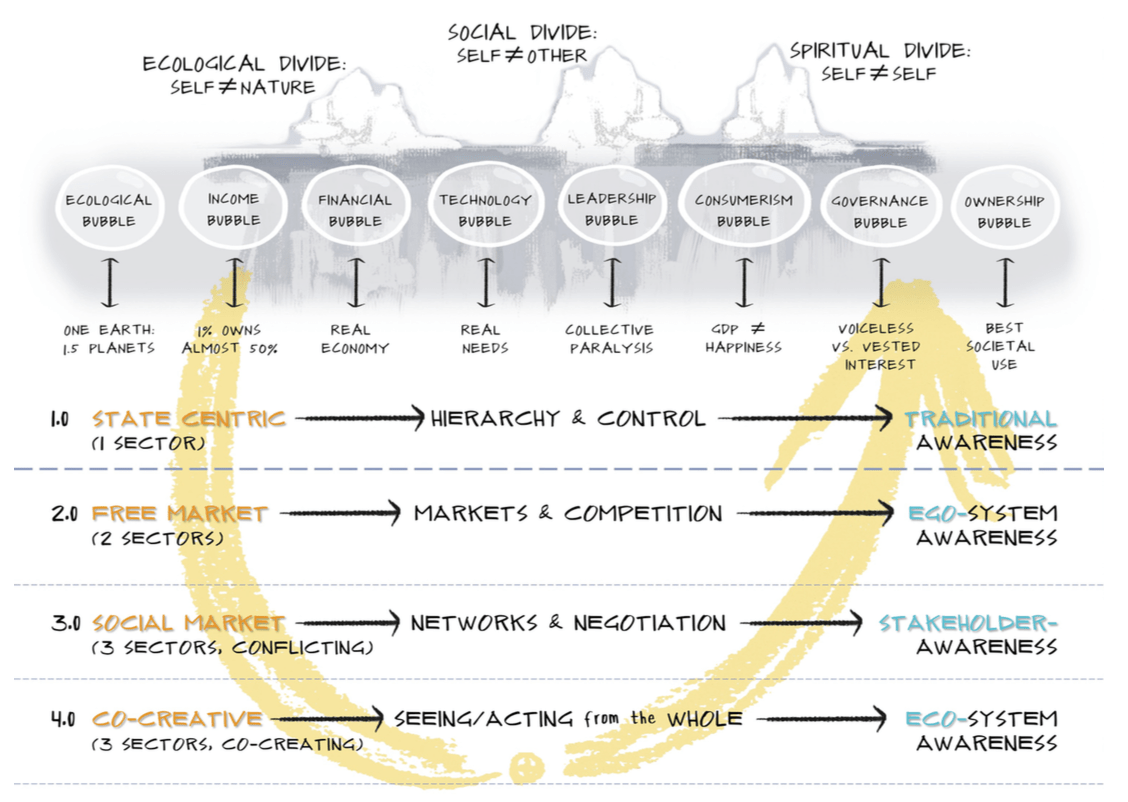
Otto Scharmer’s book Leading From the Emerging Future: From Ego-systems to Eco-Systems enable us to answer this question. He traces the development of society and economics through four developmental stages and elaborates on some core services such as banking, education and health. He identifies those four stages as they manifest in education and health. Society 1.0 was traditional society based on hierarchies. In the second stage, the free market emerged as influential player. Stakeholder awareness develops at stage 3.0 when NGOs emerge to moderate the impacts of the state and the free-market. These three stages are all conflictual and participants mostly seek individual or group advantage, usually at the expense of others.

Otto Scharmer anticipates the emergence of stage 4.0, the co-creative economy, where the same key players operate, but in a radically more collaborative manner, driven by the knowledge that our destiny depends on our collective ability to correct the excesses that are threatening our existence on this planet.

From ecosystems to ecosystems

The table traces the evolution of health and education systems across these four stages. Alarmingly, tertiary education (in New Zealand) seems to be struggling to progress from stage two. State control is choking initiative out of the system and a testing ethos prevails with a growing burden of compliance costs.

Stage Health Schools Relationship Learner/ Patient Teacher/ Physician
1.0

Traditional awareness:

Hierarchy

Authority- and input-centred: institution driven Authority and input-centred: teacher driven Doctor-/teacher centric Recipient Authority
2.0

Ego-system awareness: Markets and competition

Outcome-centred: managed care-driven Outcome- centred:

testing driven

Transactional Customer Expert
3.0

Stakeholder awareness: Networks and negotiations

Patient-centred: need-driven pathogenesis Student-centred:

learning driven

Dialogic Client Coach
4.0

Eco-system awareness: Awareness-based collective action (ABC)

Citizen-centred: well-being-driven salutogenesis Entrepreneurial centred:
Co-sensing, presencing and co-creating driven
Co-creative Co-creator Midwife

Stage 4.0 promises an alluring vision of the co-creation of education. This is detailed in depth in chapter eight of his book, available as a free download at his website. He sketches the future of education and provides what could be regarded as a global graduate profile.

What we want to see is nothing less than transformative — graduates who are genuine human beings, realizing their full and true potential, caring for others — including other species — ecologically literate, contemplative as well as analytical in their understanding of the world, free of greed and without excessive desires; knowing, understanding, and appreciating completely that they are not separate from the natural world and from others — in sum manifesting their humanity fully.

Here is Otto Scharmer elaborating on the challenge of developing the co-creative society.

Those best positioned to realise this co-created education are the educators – provided they are eager to step into their new roles as “midwives” of learning. If you are an educator, or have interest in the emergence of a collaborative society, please comment and move the conversation forward.

[1] Renate Nummela and Geoffrey Caine quoted in The Learning Revolution by Gordon Dryden and Dr Jeannette Vos (1993).

Growing vegetable and fruit consumption in Northland

My colleague Connie Atkinson and I have worked with Daniela Johnson and Ngaire Rae from Manaia PHO to develop a discussion document Growing Vegetable and Fruit Consumption in Northland. The document is prompted by the need to reverse the rising tide of diet-related interest. It is also motivated by the desire to support local fruit and vegetable producers and to encourage community or neighbourhood initiatives.

Fruits and vegetables

This post is established to enable online discussion about the document.

Here is the executive summary.

This is a discussion document that attempts to describe the parameters influencing the dietary habits that underpin increasing rates of overweight and obesity. Part one scopes the problem while part two attempts to outline strategies that might increase the consumption of vegetables and fruit.

The contribution of applied research to the Northland context is then explored, including tools to inform a broad appreciation of the complex factors that entrench poor dietary habits, and the countervailing factors that might be marshalled to reverse these trends.

These recommendations are offered.

  1. Form a research coalition to select, secure funding and execute one or more projects most likely to grow the consumption of vegetables and fruit in Northland.
  2. Investigate options to support more equitable and effective distribution systems.

Any system to improve distribution must have the two goals of enhancing health and supporting local growers as core purpose.

  1. Create a wider forum to develop a collaborative approach to develop and implement strategies to grow vegetable and fruit consumption.

It will take more than Government funded interventions to change dietary habits – requiring the engagement of communities, philanthropic organisations and other relevant stakeholders, such as vegetable growers.

The document will be published by the end of October. A copy will be available here.

Fruit and vegetable bags for Northlanders

I am working on a distribution system for increasing fruit and vegetable production, supporting local growers and encouraging a local food movement. Here is a video to promote the idea. If you are a Northlander I’d love your feedback – or if you are from further afield and have some thoughts that might help, please comment.

Research Symposium @ MIT

No its not the Massachusetts MIT, its Manakau Institute of Technology in South Auckland. Mary Quin, Cheif Executive of Callaghan Innovation opened up providing an overview of the organisation’s mission to accelerate the development of technology companies in New Zealand. As a nation we remain exposed to our dependence on the booming dairy industry, but we have an impressive number of technology companies. To regain the levels of prosperity we have enjoyed in the past, we need a proliferation of technology companies and we need to grow existing companies.

Mary Quin

Sir Paul Callaghan identified that growing the tourism and dairy sectors, decreases GDP per capitata. Technology companies typically generate higher wages.

Here are Callaghan Innovation’s strategies from their Statement of Performance Objectives for 2015.

Callaghan Innovation has moved its focus from funding research to funding the development of innovation. There success depends on building connections between the diverse stakeholders capable of accelerating innovation. Engagement and networking are essential skills to drive the changes in our national culture. It is not just cash that’s needed.

Callaghan Innovation has developed five strategic initiatives that it will focus on for the next four years, as stated in our Statement of Intent 2014–2018:


  • Strategic Initiative One: Build innovation skills and programmes for HVMS companies that want to grow, enabling these firms to transform their own rate of commercialisation
  • Strategic Initiative Two: Support clusters of firms with customised action plans to break through their shared barriers to innovation
  • Strategic Initiative Three: Build the product development skills of HVMS firms by creating technology networks that provide advice, facilities and outsourced R&D services for firms
  • Strategic Initiative Four: Unleash the innovation potential of the Mäori economy by making sure our services are ‘fit for Mäori’
  • Strategic Initiative Five: Inspire current and future generations of New Zealanders to become ambitious and confident global innovators.

Click to access Callaghan-SPE-Jun14.pdf

If we want a better world, we need to be heard

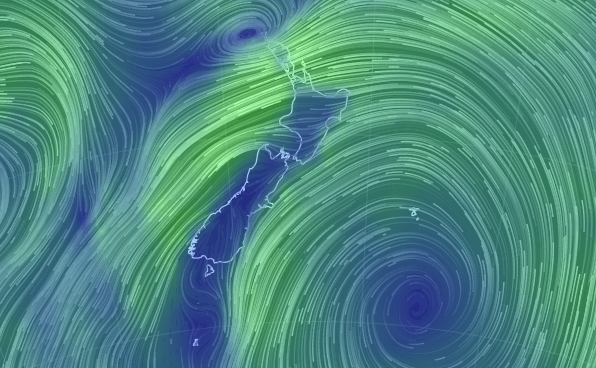
As I write this, we are still in the grips of a severe storm. I can’t recall experiencing such winds – strong enough to break concrete power poles!  Of course one weather event is not proof of climate change, but the evidence is lining up.

wind map 10 07 2014

The severe winds that have created damage in Northland (from the Nullschool website)

There are many people in Northland concerned about the sustainability of our environment, communities and economy. These people work individually, or in small informal groups or larger groups to mitigate negative impacts, envisage a better future and work toward it.

These individuals and groups are loosely networked and work in a context of dominant orthodox social and economic structures. Central and local government and their agencies, commercial interests (often controlled out of region, or offshore) and the entertainment and news media, create a discursive context dominated by an economic agenda that marginalises sustainability. The focus on economic growth creates what Paul Gilding calls a “fog of denial” that entrenches orthodoxy. As the status quo is embedded in policy, and economic structures, society’s collective resources contribute toward maintaining this worldview.

The “voice” of the many Northlanders who aspire to a more sustainable community remains muted. Their response ranges from resignation, to survivalism (insulating them and their families from anticipated cataclysm) or dogged determination. They do not have the resources of orthodoxy to realise their aspirations.

How can their voice be heard? Subsequent posts will explore the need for structures or systems to connect the diverse people aspiring to a more sustainable Northland as a conduit for a clearer and louder collective voice. While economic growth, as manifest today, is not sustainable, if we can combine our collective intelligence, we can surely redesign economic systems that deliver prosperity, social justice and protect, or even enhance to environment. And we may be able to do it in time to avert some of bleakest scenarios of climate change and social disruption.

What do you think?