Congratulations Tainui!

Waikato-Tainui’s asset base is now $1.1 billion. Since receiving its long-awaited $170 million Waitangi Treaty settlement in 1995, the iwi (tribe) has embarked on a range of enterprises to build wealth. (Turn on captions for this video segment from Te Karere for the English translation).

There are still critics of the settlement process that follows in the wake of the sometimes forced, often deceptive, alienation of Māori from their land in the second half of the 19th Century. In the 1860s, following the invasion of the Waikato by colonial forces, more than 480,000 hectares of land were confiscated, including some of the most fertile land in the country. If Tainui had been able to hold on to its land, its asset value now would dwarf the billion-dollar result.

The main imperative for Treat of Waitangi settlements is justice, but a second imperative is apparent. Not just for Māori, but for all New Zealanders, rebuilding the Māori asset base is one of the smartest things that we can do.

One reason I’m excited about this, is my wife is of Tainui descent. But I am also excited because organisations such as Waikato-Tainui can be regarded as social enterprises. They exist to generate benefits for their people. Dividends from iwi and commercial activities are distributed to their 68 Marae. Unlike corporates, the fruit of their economic activities, remains with their people. It is still early days in Tainui’s economic renaissance, thus requiring the reinvestment of surpluses, but over time the flow of funds back to the people should only increase. Social enterprises have asset-locks to ensure assets are not bought-out and privatised. That will not happen with Tainui.

From the taxpayer’s perspective, Tainui is producing a return on the settlement that should only increase over time, and is delivering benefits to its people, including scholarships. Ngai Tahu in the South Island have achieved equally impressive results. As the Treaty settlement process rolls on I look forward to seeing other Iwi achieve similar results.

Gareth Morgan’s “kicking the can”

Gareth Morgan, economist, philanthropist, activist and entrepreneur doesn’t like the impact that sugar has on our health and suggests taxing sugar rich products, such as soft drinks. His book, Appetite for Destruction, provides compelling arguments for changing the environmental levers that make processed food ubiquitous, so that people are encouraged to eat more fresh fruit and vegetables. Here is a link to Garth’s blog.
Kicking_the_Can

Do you get the potential of local currencies?

Money is like blood for the body economic. It has to keep circulating for local economies to prosper. But what if that economic lifeblood is being drained away by national or international businesses?

I spent Monday and Tuesday this week at an inspirational conference hosted by the Far North District Council (FNDC) – the governing body for the northernmost district in New Zealand. There is only about 55,000 people in the Far North, but the quality of thinking at the conference impressed mightily.

The district has beautiful beaches and magnificent forests, but like many other rural areas in New Zealand, is in decline. Population is slowly declining as people drift to cities to find work. A reason for this decline is the increasing presence of national and multi-national businesses. In earlier times, the money spent in the district, largely remained and circulated in the district, but now increasing amounts are syphoned off as profits to businesses head-quartered out of region.

The conference presenters focussed on solutions. Economic instruments, including local currencies and time-banks were the focus on Monday afternoon. Here is an introduction.

In regions such as the Far North there are people who have no work, and there is work that needs doing. The current means of exchange, the orthodox financial system, isn’t meeting the needs of rural communities. Time-banks, or local currencies, create a new means of exchange. And the local currency circulates in the local economy building wealth back into local communities.

Di Maxwell, an FNDC Councillor, looks to the city of Bristol as an example for her district. The Mayor of Bristol is paid with Bristol Pounds.

Recession-proofing?

The last recession had its roots in the corrupt practices of large corporates. Their failures reached deep into rural communities around the globe. There is no doubt that our global economy is now deeply inter-connected, and I believe that that is ultimately a good thing. Local economies need to participate in the global economy, but they need to do it from a position of strength, and not left exposed to the full blast of global competition. Laurence Boomert, speaking at the conference compared a local currency to a safe harbour. If, or more likely, when, we have a major global economic failure, local currencies have potential to shelter people from the harshest impacts. They encourage local suppliers and may give them the edge required to  survive and thrive.

Bristol plans to spread the Bristol Pound concept around the U.K. We need local kiwi currencies too!

The twilight of capitalism?

This post is about change – the fundamental change that we must master to transform our world.

Why – because our current economic and political systems have pretty much reached their “use by” date. They are struggling to deliver the benefits they have previously generated in such abundance. Until we change the assumptions that support these current systems, we won’t solve the problems that they manifest.

Jeremy Rifkin claims that capitalism will be replaced over the next few decades by a new economic system, the collaborative commons. In his new book The Zero Marginal Cost Society, he identifies how the democratisation of information, enabled by the Internet is a template for driving down the costs of energy, logistics and material fabrication.

How will we change?

How are we going to make these changes? We won’t make this transition incrementally. Using “technical change” we incrementally improve our existing technologies or systems. We tweak here and there and get a little more out of them. We do this without examining our big assumptions about our world.

To achieve the scale of change required we must question many of the assumptions that are propping up our failing systems. Adaptive change is based on a reassessment of our assumptions and a clearer vision of our future.

Collaboration is the key

The Internet provides us with superb collaborative tools. We are only just beginning to see how it will aid the transformation of our thinking. Industrial age organisations grew their hierarchies as their businesses grew. While these hierarchies enabled organising on a large scale and have created great wealth, they inevitably created communication failures. Typically, in large organisations those at the apex are disconnected from those producing and delivering products and services. According to Gallup, only 13% of employees are engaged globally.

There are small organisations experimenting with collaboration as foundational communication and organising practices. Enspiral is a New Zealand example.

“Enspiral is a virtual and physical network of companies and professionals working together to create a thriving society”. Josh Vial

Here is Josh Vial of Enspiral talking about collaboration. Josh aspires to supporting the development of a global, sustainable civilisation.

“The fundamental cause of the problems we have on the planet is the way our organisations are built and arranged and constructed…” Josh Vial

Josh is motivated to change our organisations from being largely extractive (extracting wealth and value) – to generative – creating social good alongside other aspirations. What is most encouraging from both thinkers featured here, is that we have the resources to create a sustainable world, that creates wealth for all its peoples. The key is unleashing human capability.

Materiality assessment at UPS

Materiality assessments are a way for organisations to identify what matters to stakeholders, thus creating  solid leads toward developing a sustainability plan. This is why engagement is the leading edge of sustainability – by engaging with our stakeholders and finding out what is important to them, we can shape strategy to be better aligned with stakeholder expectations.

You may recall an earlier post commenting on engagement in gold mines. Those mining companies that genuinely engaged with proximate communities had a smoother path to production and therefore a quicker payback period. You can read more at Stakeholder Engagement Pays!

A Harvard Business video describes the materiality assessment processes used at UPS. They use a matrix similar to those described in an earlier post.

UPS materiality assessment

The materiality of issues is mapped out according to their importance to internal stakeholders, on one axis, and external stakeholders, on the other. This approach helps to contrast different perspectives and priorities, but also identifies the sweet spot, where materiality is high for both sets of stakeholders.

UPS stakeholder and materiality processes are outlined here.

The anatomy of health changes

We are on the verge of a major change in the health system both here in New Zealand and in the wider world. We face to sad paradox – while an estimated 870 million people are under nourished, over 1.4 billion are over weight. Both phenomena create consequent health problems, causing human misery and depleting our resources. Fortunately an increasing number of us are gaining more nuanced appreciation of this problem. It is clear that the problem of excessive weight is as much about the quality of food eaten, as its quantity.

The industrialisation of the globe has generated huge benefits for us and supported the development of modern health services. But consequent changes in our diet and lifestyle are eroding and even negating these benefits. We eat too much energy dense and nutrient poor, over-processed food.

A paradigm shift

It is helpful to understand the forces at work through the concept of the paradigm shift. Thomas Kuhn coined the term in his book The Structure of Scientific Revolutions in 1962. He argued that rather than evolving steadily, science progresses through periods of revolution and orthodoxy. After the revolution, a new scientific orthodoxy is established, but over time becomes resistant to change and new influences. The next revolution will only happen when the sheer quantity of new information and thinking displaces the old.

paradigm shift nutritional food

The dynamics of a paradigm change

We are approaching this point now. Industrialisation has provided us with convenience foods that are highly processed and nutrient poor – much of the nutrition in food simply doesn’t survive through processing and distribution systems. The health system has largely accommodated this situation and accepted it as “normal”. In Western economies, the majority of health resources go into dealing with the consequences of poor nutrition (this is still contentious, but it is not the focus of this article to argue this point). And incidentally, many health professionals and health service and supply industries benefit financially while the situation persists. Another force that supports this paradigm is the food industry that produces this “fake food”. Based on ineffectual public policy, it also appears that the majority of policy makers are embedded in this paradigm.

The new paradigm is based on the understanding that eating nutrient rich food that is minimally processed supports our health. One of the main forces supporting this change is the Internet. The exchange of scientific and clinical information about nutrition is intensifying exponentially and is available to an ever-increasing group of health literate users. These people can find supportive health professionals in their communities and online. Some cafés and restaurants are following the trend and providing nutritious and tasty food.

The broader sustainability movement supports this new paradigm. Approximately 26% of the New Zealand population fits the Lifestyles of Health and Sustainability (LOHAS) market demographic. The Living LOHAS report describes the demographic:

LOHAS aligned consumers look behind products and services to an Hippocratic oath assessing whether they should buy a given product or service. They probe for alignment of organisational intent. Authenticity of the offer is mandatory and the company is mandatory. LOHAS consumers want to know “where does it come?”, “how is it made?”, “what is it packaged in?” and “what will happen when I dispose of it?”.

Imagine the health we will enjoy when we embed this new thinking in health systems adding to the known benefits of industrial age healthcare – hygiene, infection control, appropriate surgery and physical trauma treatments for example.

The ethical challenge

The story of the two stonecutters illustrates the ethical paradox many health professionals face.

A man once encountered two stonecutters and asked the first “What are you doing?” He replied, “cutting a stone”. When the second stonecutter was asked, he replied “I’m building a cathedral”.

We have plenty of very competent and dedicated health professionals who are skilfully and diligently cutting their own stones. Its not so easy to find those who can find cognitive space for both their specialist skills and an overview of the system’s effectiveness. While practising ethically in their own professional space, they participate in a system that inflicts damage on society and an increasing burden on taxpayers. Where are the cathedral builders?

Engaging to change

For those of us who wish to promote a health revolution, engagement is a key to change. In the discursive battle that accompanies any significant paradigm change, it is easy for the antagonists to dichotomise, but this often leads to entrenched and reactionary views. Niki Harré’s excellent book Psychology for a Better World, suggests that people need to be engaged emotionally to further any worthwhile cause. She also emphasises the need for the need for positive example – leading by example.

I changed my diet for the better on being diagnosed as pre-diabetic. These changes helped me to lose 13 kgs in four months. The health benefits for me have been so dramatic that I need little motivation to stay on this path. In my journey I have found good friends with good advice, a rich resource on the Internet and supportive health professionals.

My work provides opportunities to work with health professionals and community health activists creating a rich matrix of people wanting change. We need to seek out those health professionals who can see the bigger picture and work together for change. Thus two avenues of change are created, a grass roots led change and , sooner or later, policy change.

What do you think?

Useful links

Here are some of the materials that I have found useful. Gareth Morgan is a New Zealand economist who puts his massive intellect to work on various social issues. His book Appetite for Destruction elaborates on the dangers of “fake food”. He also provides an economist’s perspective on how a government might profit from a radical overhaul of health funding, including taxing “fake food”.

Several competent physicians provide mountains of information on health and nutrition:

The Green Med Info website includes a huge resource of research papers on health and nutrition.


All Blacks culture drives their success

The All Blacks are arguably the most successful International sports team. This year they won all 14 games against the top teams in the world.

The All Blacks culture is the foundation for their success. I teach organisational culture, so I know the theory well and I am always looking for strong examples. They are not easy to find. In yesterdays interview on National Radio, when Kathryn Ryan asked about the team culture, coach Steve Hansen responded:

Well I think culture is a word that is used a lot and I think it should be, because I think it is the key ingredient. If you have got your culture of your business, your sporting team, your school – whatever it is that you are involved in right, and its being lived every day;  And that’s the key thing living it every day from the top down to the bottom rather than to bottom to the top. So you can’t have a day off…If your values are x,y, and z, then you have to live those values every day. You don’t have a problem with having someone not fitting in because that’s just the norm. And when something becomes the norm its easy for a young guy to come in and sees what they do – “oh that’s what they do I’ll do that”.

Its when you have the guys at the top doing something different to what your culture is all about that you get people wandering off and losing focus it becomes a rotten culture, then you are doomed to fail. So it’s a matter of living it every day and making sure the people at the top are driving it.

Here is the full interview. Steve Hansen also talks about the teams vision.

Most kiwis are raised on rugby and have a deep love of the game. So we know rugby culture, its stories, its heroes, its powerful visible artefacts. In the performance of our current team, if we look a little deeper we can see the cultural drivers that makes the team what it is. Players such as Ma’a Nonu, who struggle to perform to potential in regional teams, flourish in the All Black environment. When you watch the players in action, you can see their focus and trust – they focus doing their own role and they trust those around them are doing the same. When it comes together it is something beautiful to behold. This video captures some of the highlights of the year. Watch for the final try of the year against the Irish and the fluidity of the relentless attack.

I am always looking for examples of great leaders. I have found one in Steve Hansen. He doesn’t come across as the most articulate of men, but what he says is worth listening to. He’s this year’s IRB Coach of the Year and has probably been the key person driving the cultural development of the team over the last six years. If we can translate his lessons about culture into action, we can have a great year at work, in our families and communities in 2014.

And a “shout out” to Kath Kozel, a former colleague and communication teacher. I was raised on rugby, by Kath migrated her from the U.S. Her and her husband Matt have become great rugby fans. Her ranking in virtual rugby peaked at number 10 in the nation this year. Sometimes we need “outsiders” to reflect the beauty of the culture. Thanks Kath.

Five ways to collaborate online

Having effective ways to collaborate online enhances our ability to engage in a meaningful way. You have probably worked on a shared document with others by sending emails back and forth. This seems to still be the default way to collaborate, but it is less than ideal. It sometimes hard to identify the latest version of the file and updates take time. And for busy people the trail of relevant emails can be spread throughout your inbox.

Here are five ways to collaborate.

Google Drive

Google Drive (formerly Googledocs) offers a free online document creation and storage facility. Google Drive also has the capability to connect other apps that complement Drive’s native apps. Google Drive also offers 15 gigs of storage space. Online collaboration is easy with Drive – you have the option either to share a file or a folder with others and enable them to edit.

Microsoft Office 365

I haven’t used Microsoft Office 365 yet. It is a shift from a one-time purchase of the software to an annual lease. It offers file sharing and capability for collaborating on documents. Other features include multi-party HD video conferencing.

GroupMap

GroupMap offers different collaboration capabilities. It is more suited to collective brainstorming and sharing information and ideas rather than formalising them in a document. When you share a GroupMap with someone, they are able to contribute ideas by typing into “My View”. Switching to “Group View” displays aggregated contributions. Note that GroupMap has a template for stakeholder mapping.

Blogging

Blogs such as WordPress.com or Blogger are easy ways to establish a website providing the advantage of a publishing platform. In WordPress.com you can invite others into your blog as contributors. When I have attempted this, some have not got past the need to set up a WordPress account. If you have a WordPress.org account, there are a number of plugins available to enhance collaboration. Participad is a WordPress plugin that allows multiple people to edit the same WP content at the same time. I haven’t used Blogger and am interested to know if access is easier for guest bloggers.

Wikis

Wikipedia is the best known wiki and you can collaborate there to create new content. Mediawiki is a probably more suitable for those that want to collaborate without the pressure of conforming to Wikipedia’s protocols. This website provides great advice for collaborating through a wiki.

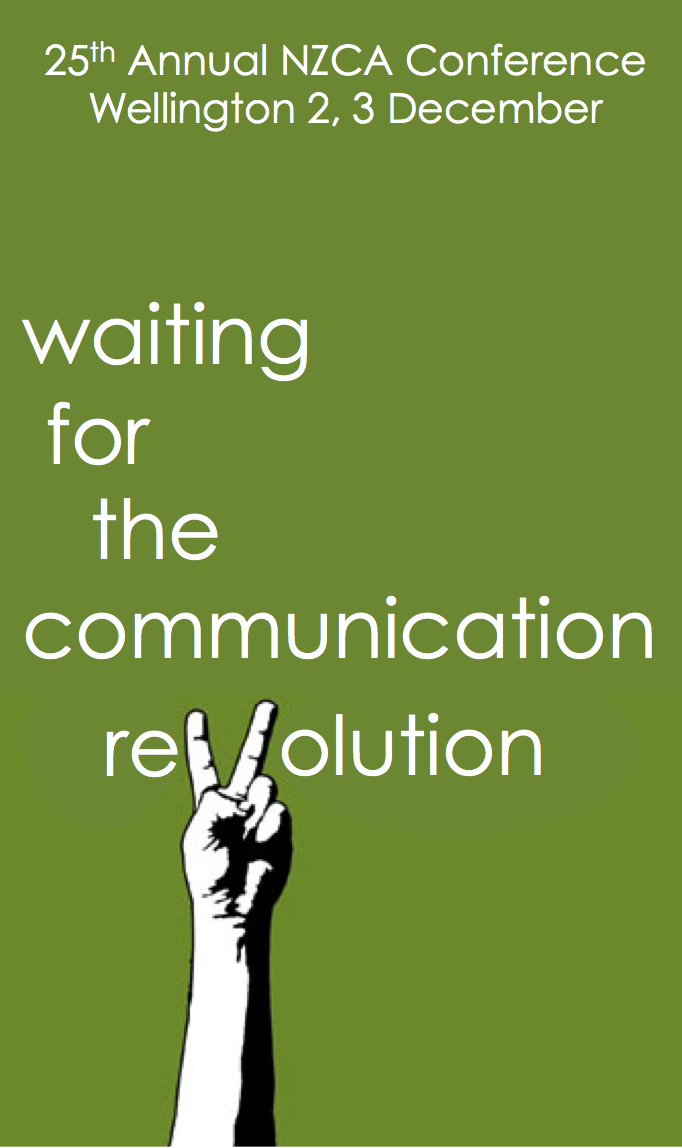
Waiting for the communication revolution

Over the last few decades communication channels have multiplied and in some organisations, communications have improved, but for the vast majority, workplace communication is still a major impediment to both organisational effectiveness and individual well-being. What are the solutions? How will the breakthroughs come?Communication Revolution

The foundations have been laid. The Internet has been with us for almost 25 years. Edward Freeman articulated stakeholder theory back in 1984. The publication of In Search of Excellence in 1982 focused people on the significance of culture. We have come a long way in the architecture of communication, but how are these developments manifest in organizations? Have they fundamentally changed our communication for the better, or is the residue of our old hierarchies still blocking significant progress?

This is the theme of our 2013 Conference in Wellington on 2, 3 December – Waiting for the Communication Revolution.

How do we evaluate the quality of organizational communication given these innovations? Here is an attempt to identify what good communication looks like in a 21st  Century organization. This organization will be characterized by:

  1. clear purpose and values
  2. a focus on value creation for stakeholders
  3. its people building warm relationships with those they frequently work and engage with
  4. diversity is encouraged, diverse voices are heard
  5. communication is transparent
  6. technology and intent encourages sharing of information and knowledge
  7. there is a orientation to learning
  8. social media is a organisational asset.

What do you think of this list? What’s missing? What organisations do you know that manifest these qualities?